
Summer— the longest stretch of light all year— hands you everything when it comes to building a village, and most of us don’t even notice it happening.
There was a time when we didn’t have to and many of us still remember it (and no we are not boomer either). If you grew up in the 80s or 90s, you probably remember what summer actually felt like before it became content: the neighborhood kids materializing at your door before breakfast, the family reunions that took over entire parks, the campground friendships that formed in three days and felt like they’d last forever, the sports teams and block parties and screen doors left open until dark.
Nobody scheduled it. Nobody optimized it. Nobody perfectly curated it. It just happened, because the conditions were right and the infrastructure was still intact.
That infrastructure is mostly gone now and summer— which used to do the community-building work for us almost automatically— now just sits there full of potential that most of us scroll past.
But the conditions are still the same.
They have always been the same.
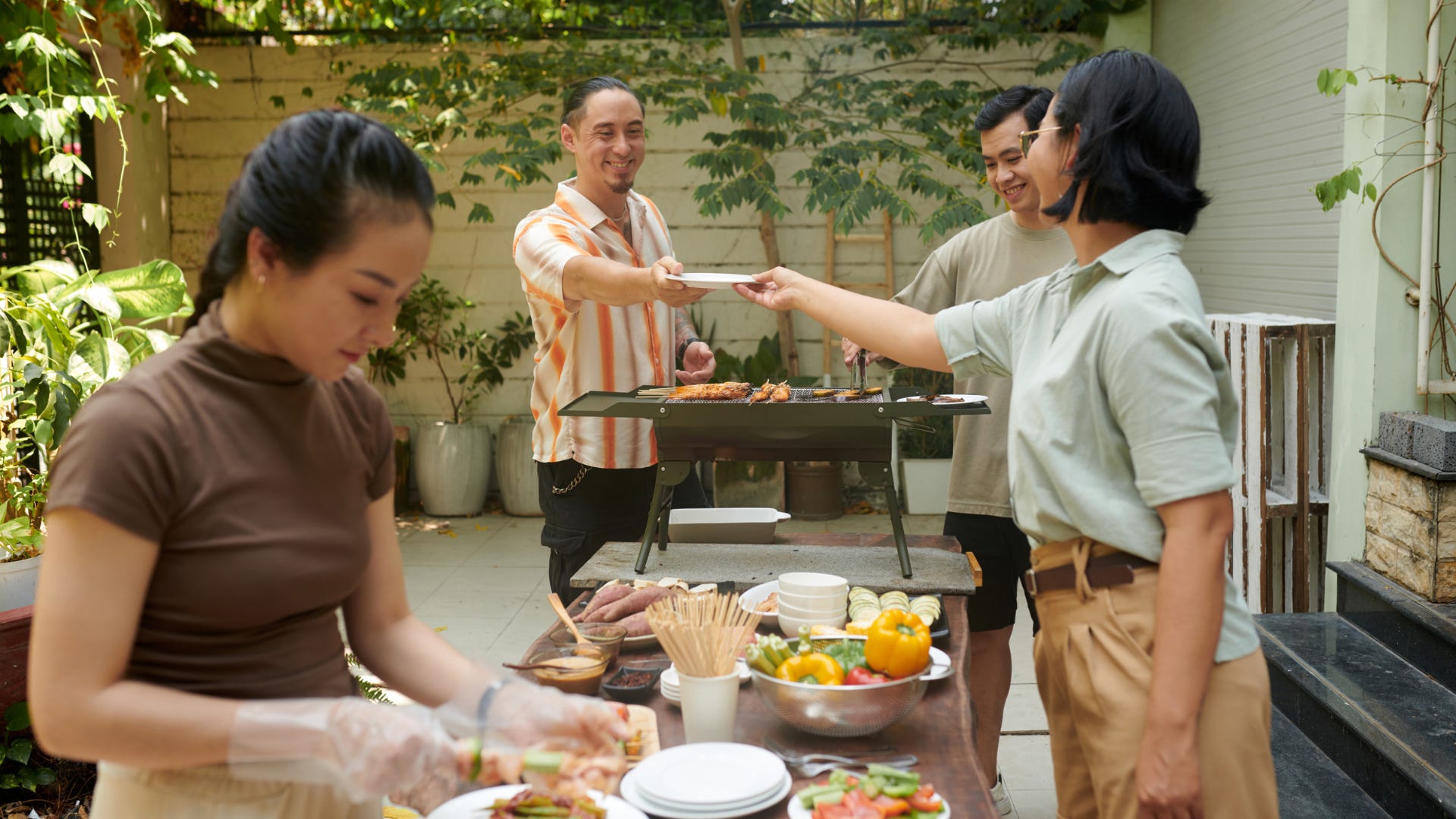
The evenings still stay warm enough to sit outside. The bodies still want to be outdoors. Food still grows in more abundance than any one household can use. Every single condition that the village needs in order to form is still handed to you for free by the season itself, which is exactly why every traditional culture on earth used summer to gather and feast and connect and renew the bonds that the harder seasons would test.
Summer is a standing invitation to build the infrastructure that will carry everyone through the hard times and to plant something now that will hold people when the cold comes back and the isolation creeps in. The village you build in summer is the village that survives the winter.
The question is whether you will use it.
Hi! If you’re new here, welcome!
My name is Jenna Gallarzo— I’m a mother, Vedic clinician, Doula, Bodyworker, Energy Healer, and Multimodal Educator; and my nearing 20 years of clinical practice and teaching is woven through everything I write and build. My work lives at the intersection of constitutional medicine, nervous system science, ancestral living, and actively trying to midwife the matrifocal world I believe is coming whether the empire likes it or not.
This article you are reading is the second piece of a multi-part series about the Summer Solstice and Transition.While Part 1 named the season and its arc, this piece is the why—the philosophy, the stakes, the vision of what a village actually is and how it holds all the different kinds of people summer touches.
It walks through the loneliness that isolation has engineered into modern life, the cost it carries, and what becomes possible when you begin to build differently. It names the constitutions and natures that will show up in your village, so you can build something that holds all of them instead of burning people out. It is the argument for why this matters, given deeply.
The companion playbook at the end of this article makes up nearly 60-70% of this piece and it is pure action: the who to invite, the where to gather, the what to actually say, the formats that work, the scripts you can copy, the rhythm mechanics that turn a one-time event into a village. It has the step-by-step first-season roadmap, the troubleshooting for when things get stuck, the complete mutual-aid resource guide, and every practical move you need to actually make this happen. It is nothing but the how.
Together they are the complete map: why you need this, what it looks like, and exactly how to build it, week by week, with the people already near you.
The article and toolkit will be broken up with images— scroll all the way to the comments to catch both.
Read Part 1 here:

THE ACHE
You were never meant to do any of this alone, and some part of you has always known it.
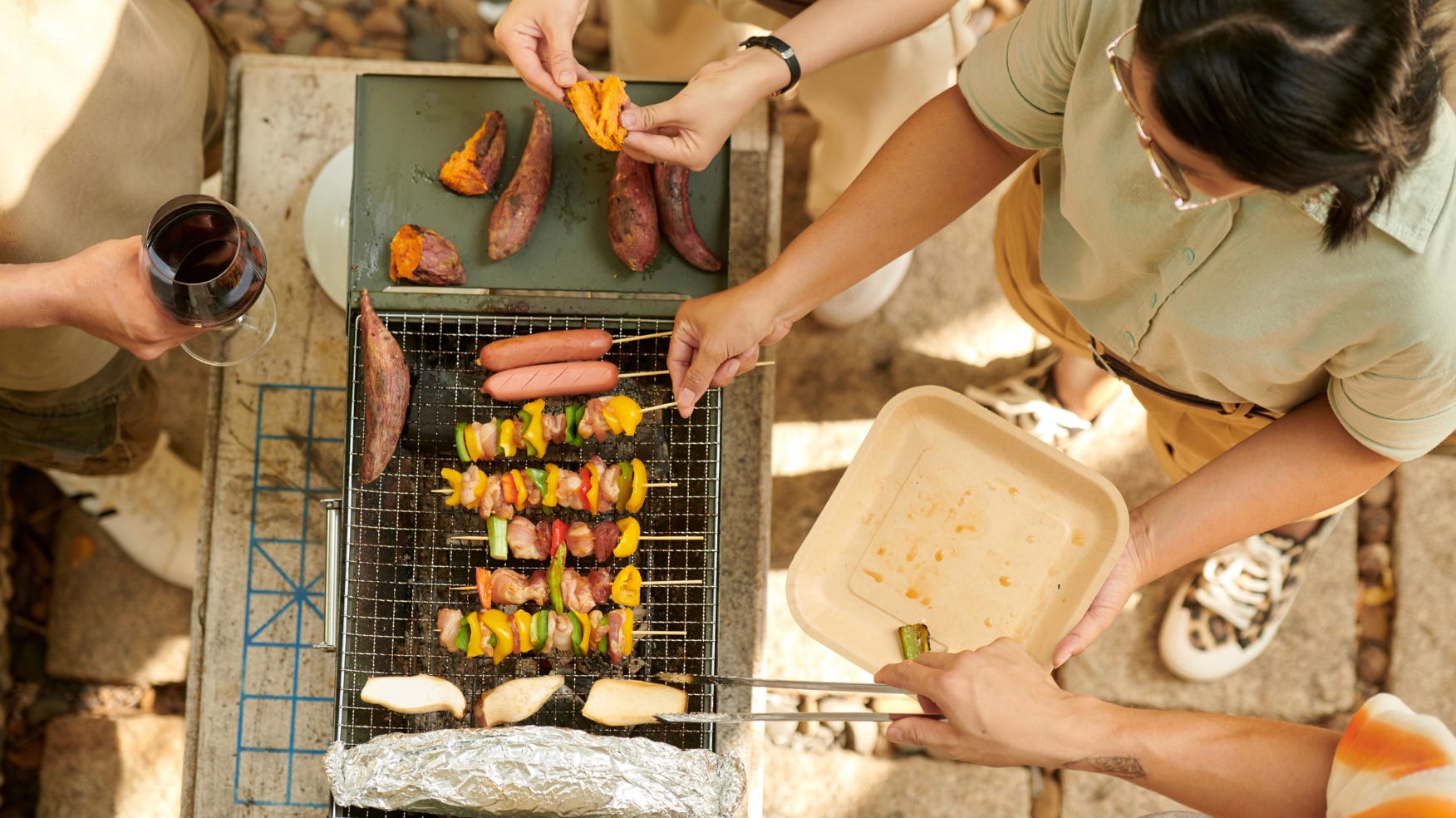
There is a specific ache that lives underneath modern life —quieter than grief but somehow just as heavy— and it gets louder in summer, the season that promises connection on every screen and then leaves so many of us watching other people’s gatherings from inside our own quiet houses.
We have been taught to read that ache as proof of something wrong with us personally, as evidence that we are bad at friendship or behind on life or somehow fundamentally unlovable. The shame of it deepens the ache and makes it harder to speak about, because admitting loneliness in a season of performed togetherness feels like admitting failure.
But this reading is not only wrong, it is actively cruel.
It takes a symptom and calls it a sickness in the person, when the sickness is actually in the arrangement of our lives themselves.
For almost the whole of our time on this planet, humans lived inside community… and not the curated, scheduled, occasional thing we now call community, not the friendship circles we engineer or the meetups we plan around our individual calendars.
It was the dense, daily, unchosen kind that was simply the baseline of existence.
The extended family and the clan and the village, all living in proximity and obligation to one another, the days structured around shared tasks and shared rhythms.
Children were raised by many hands rather than two exhausted ones, so the load was distributed and no single pair of adults was expected to be sufficient.
Food moved freely between households, not as charity but as the normal flow of resources and abundance.
Elders were woven into the daily life of the young instead of warehoused away from it, their presence acknowledged and their knowledge consulted as a matter of course.
The endless work of staying alive —the work that now falls onto a single couple, and more than often the mother— behind a single closed door, was spread across a web of people so that no household carried the full weight alone. The village we all want requires re-spinning this web— imperfectly and falling apart at first, but still we must continue to spin. The web was the basic operating condition of human life, the thing our nervous systems were designed around, the structure that made survival possible and sustainable.
And we have lived without it for only a handful of generations, which in the long story of our species is barely a breath.
The isolated household is not the natural state of things, no matter how normal it has come to feel. We treat it as the baseline, the default, simply the way things are, so thoroughly normalized that most of us have never questioned whether any other arrangement might be possible.
It is fucking not.
What we are living in is a recent and genuinely strange arrangement, one that was built up deliberately over barely a few centuries by forces that profit directly from isolation and the erosion of communal acknowledgment and support, designed to make us dependent on systems and purchases for things the village once provided for free.
And it is quietly making us sick in ways we have nearly lost the ability to see because most of us have genuinely never known anything else, because we have no reference point for what life looks like when you do not live alone in a box.
The loneliness that public health officials now name as a genuine crisis of epidemic proportions is not really a mystery but simply what happens when you take a village animal and raise it, generation after generation, in isolation.
And the cost is not only emotional, it’s also physiological… which is the part we tend to underestimate even when we feel it most acutely.
Chronic loneliness is now understood to carry a mortality risk on the order of heavy smoking, meaning it will shorten your life in measurable years.
Loneliness drives inflammation and heart disease and cognitive decline, the slow dissolution of the things that keep us alive.
Connection, meanwhile, does the reverse. It lengthens life, steadies the nervous system, buffers nearly every hardship a person can meet.
The village was never just nice to have. It was, quite literally, how human beings stayed alive, how we survived the hardships that come, how we managed the work of staying fed and sheltered and sane. Its loss is killing us slowly enough, quietly enough, that we have mistaken the dying for normal life.
The box we have been living in, though, is beginning to fail, and that failing is the opening of our lifetimes. You can feel something shaking up in the world around us right now, can’t you?
The structures people once leaned on are thinning and becoming unreliable, the costs of the isolated life keep climbing while the life itself delivers less and less in return, and there is a widespread sense underneath all the noise that the way we have arranged ourselves is not going to hold.
When a system so total and so violent is on its last few breaths, it gets desperate.. which can make this chaos very frightening… but I have plenty of articles about that particular side quest, and getting deep into this topic would only distract us from the real work right now.
Long story short….
When an old arrangement begins to come apart, the question stops being how to prop it up and becomes what we build in its place.
We are living in a between-time, that liminal space between the ending of one world and the beginning of another, and between-times are precisely when new ways of living get seeded and take root.
The old way is failing.
Something new has to be built.
And no one is coming to build it for us.
THE VILLAGE AS PROTOTYPE
The new world will not arrive all at once, delivered from above, fully formed and ready to move into. The future we all want is built in miniature, from below, by ordinary people who decide to start living differently before the rest of the world has caught up.
Every genuinely new way of living that ever took root began with a small group who started living that way despite the fact that it was not yet normal, and what looked at first like a fringe experiment slowly became the obvious thing everyone does.
The shift happens incrementally, one household at a time, until suddenly the new way is just what people do and the old way is the strange thing people remember their grandparents doing.
The village you build is not a charming hobby and not merely a salve for your own loneliness, though it will ease that too. The village, more specifically the indigenous matrifocal village, is a prototype of what comes next.
When you gather a few households into a real rhythm of shared meals and shared care and shared ordinary life, you are demonstrating that another way is possible and laying down the actual infrastructure that other way will run on.
You are showing, not telling. You are practicing, not theorizing.
The village is how the future practices being born, one backyard at a time.
Which is exactly why summer matters so much, and why this belongs in a series about the season itself. The barriers that isolate people through the rest of the year— the ones that make gathering nearly impossible no matter how much you want it, all fall away now.
The cold and the dark and the early nights of winter drive everyone indoors and apart. The chaos of the holidays fractures time and attention.
Spring is unpredictable and transitional.
But summer hands you conditions that make gathering almost effortless by comparison.
The evenings stretch late and stay warm enough to sit outside in, so people linger. The bodies want to be outside rather than trapped indoors. Food grows in more abundance than any one household can use, practically asking to be shared.
Every single condition that the village needs in order to form is handed to you, for free, by the season itself, which is exactly why every traditional culture on earth used summer to gather and feast and celebrate and renew the bonds that the harder seasons would test.
The frenzy you feel and were taught to audit in the last article, the intensity and the heat and the relentless momentum, is in large part the season’s own gathering energy hijacked and pointed at consumption and performance instead of at each other.
To turn it back toward the village is simply to use the season for what it was always for.
THE MEDICINE
The village is also the quiet answer to the way this particular season can hurt, the way Fire can turn from gift into burn, the way the intensity can become too much.
All through this series we have talked about Fire and its two faces, the light and the darkness, the gift and the burn, but inside a web of other people, inside a real community, that burn is so much harder to fall into.
The early warning signs get caught by someone who knows your face well enough to see it change, to notice the shift in your eyes or your energy before you yourself have registered what is happening.
The depleted week gets absorbed by other hands that quietly step in without being asked.
The meltdown, whether it is happening in a child or in you, lands in a room with more than one steady nervous system in it, and suddenly the dysregulation has other nervous systems to borrow calm from.
This is the heart of why community is not a luxury but a physiological need.
Human nervous systems are built to settle one another, to borrow calm from the calm bodies nearby, to find their rhythm in the presence of other steady rhythms. The lone adult trying to regulate a dysregulated child while running hot themselves is attempting something we were never designed to do alone.
A village is a nervous-system net— a distributed system of regulation— and it is the literal mechanism by which our species was built to stay regulated through the hard times.
And the village is where joy stops being something you consume individually and becomes something that compounds and multiplies. Joy breeds joy, this is something everyone has felt in moments, that sense of how good things amplify when they are shared, but almost no one builds a life around that truth.
A good thing experienced alone is good, yes, but the same good thing experienced among people you love multiplies in a way that changes the math entirely, moving from body to body, amplifying in the moment and then living on afterward in the shared remembering.
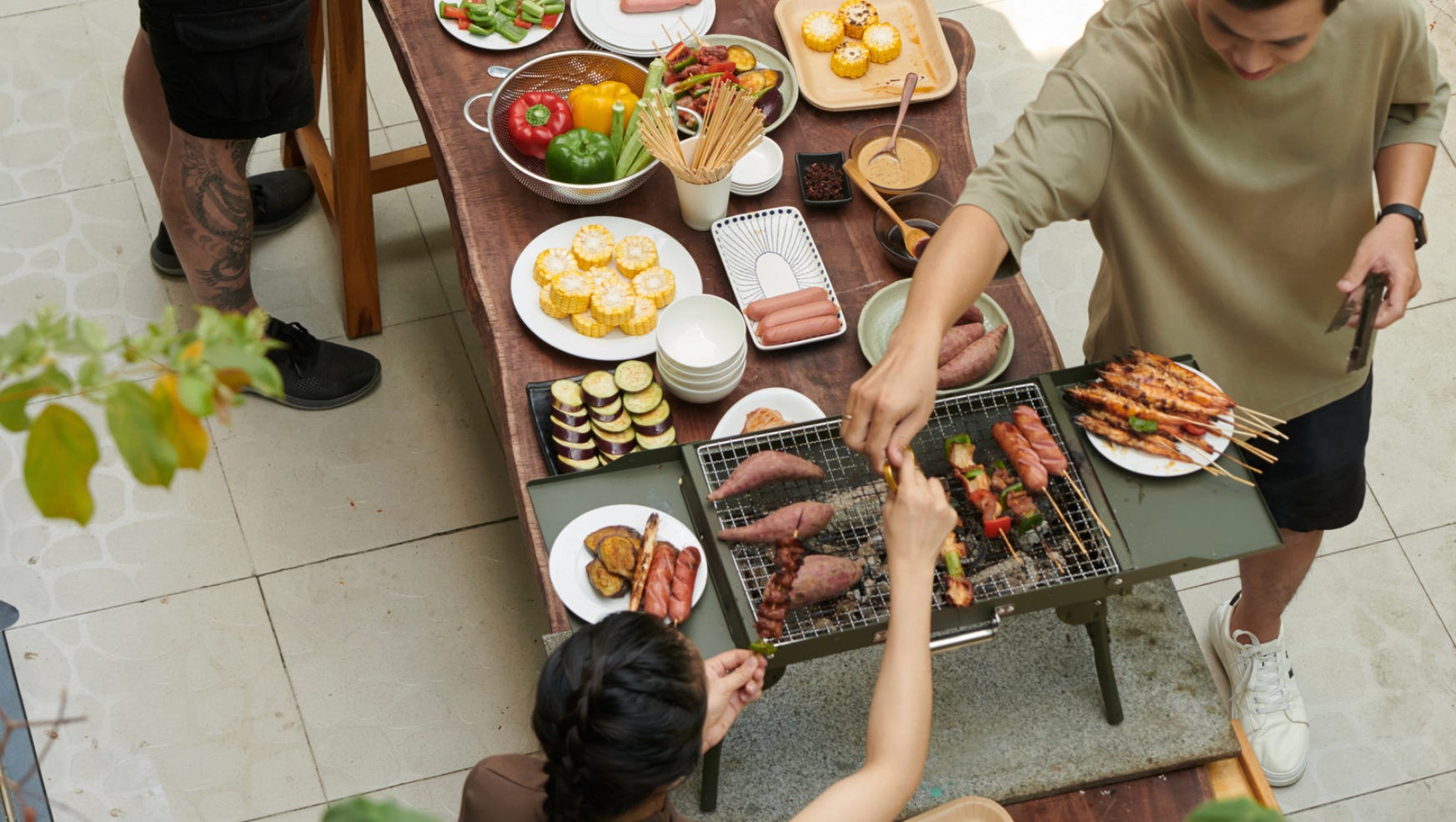
The long ordinary summer evening where the food was simple and the children went feral in the yard and the adults laughed until the light was gone is far more than just a pleasant night. It is a recharge and a filled cup that every person there carries home and draws on for weeks.
In a frightening and depleting time, no manufactured experience and no purchased peak experience can do what that does, because the joy that compounds requires other people, and the season that makes gathering easiest is handing you the chance to generate it in abundance.
The village is not only how we survive the between-time, but how we keep our capacity for delight alive inside of it, and a people who can still feel joy together is a people who can never be fully conquered.
None of which answers the hardest practical question, which is simply finding the people. And the deepest obstacle there is a belief that has to be dismantled before anything else can begin: the belief that real community requires the perfect aligned friends who share all our values, and that since those people are nowhere in sight, the whole thing is hopeless.
This is one of the deepest lies that keeps people lonely for decades.
The village was never built on agreement alone. It was built on proximity and evolving relationship with the imperfect humans who simply happen to be near, who you did not choose and might not have chosen.
The neighbor whose politics you cannot quite agree with but whose kid plays with your kid is more valuable than the perfectly aligned friend you have to schedule six weeks in advance to see. The person who can water your plants or sit with you on a hard night is the one who lives close, not the one who agrees with you online.
Functional beats fully aligned every single time.
What makes this moment strange and a little hopeful is that the old gathering places where proximity used to do this work on its own have largely vanished. The third places, the spots that were neither home nor work where people simply ran into each other and formed bonds through repeated presence, the corner shops and the front porches and the union halls and the parks that served as community anchors, have thinned out dramatically across a couple of generations.
It is precisely why connection now feels like it takes deliberate effort when it once happened almost by itself. But before you use this as a fucking excuse, it is not one. It is your dharma —your purpose— made clear.
The work of our moment is to rebuild those places of encounter, sometimes literally, and sometimes by becoming a regular somewhere on purpose until the accidental familiarity that third places once manufactured starts to happen again.
And where those places live online now, on the neighborhood apps and the local groups and the give-and-take networks that run beneath most communities, the task is to treat the screen as a doorway rather than a destination.
Let it introduce you, then get the connection into a body and a yard and a real evening as fast as you can, because a village has never been something you can do through a screen.
That may be one of the biggest and least admitted ploys the empire has pulled over our eyes: playing village online to superficially clog the gaps that used to be filled by actually living it in the flesh.
You are also not the only one aching for this, and that should give you courage.
Nearly everyone you might gather is carrying the same loneliness and the same fear of being the one to reach out first, which means the moment you become that person, you are answering a hunger that was already there.
The relief people feel when someone finally reaches out and asks them to come is disproportionate to how small the ask is, because so many of us are waiting for permission to want this.
Children build bonds between households at a speed no adult can match, running together until the adults around them have, almost by accident, become a community, which is why anywhere children gather is fertile ground for a village to start.
And elders, so often the most isolated and overlooked, are the keepers of exactly the knowledge a village needs, the memory of how this all once worked.
Weaving them in is not charity, it is restoration and a return of the full span of life to a single shared table… and the season’s long evenings make room for both the children running loose and the elders sitting late.
WHO THIS HOLDS
Whatever you build, build it to hold the whole span of life and the whole range of people the season touches differently.
Summer is genuinely wonderful for some and genuinely brutal for others, and the difference is usually invisible from the outside, which is why a real village names it and reaches toward the ones for whom it is hard.
Teenagers often feel most isolated in exactly the season when everyone else is performing connection, when peer groups splinter into those with plans and those without.
Young adults, newly moved or newly partnered or newly solo or still in school, are often invisible, too old to be the focus of child-centered gathering and not yet embedded in the parent networks, needing explicit invitation and a place that does not assume they are coupled or have their life figured out.
Single parents carry the full economic and emotional weight of a household with no one splitting the shift, no one to tag in when they are depleted.
The parent working outside the home all day and the parent working from home and the parent night-shifting and sleeping days are all running different seasons, each needing something different from a gathering, and a village that builds around those different rhythms rather than assuming everyone is available at the same time is one that actually holds the people whose work shapes their summer.
The person with chronic illness or invisible disability is often managing pain or fatigue or the constant cognitive load of keeping their body running, all while appearing fine on the surface, and the village that says “come for ten minutes or the whole evening, whatever you have” is the village that actually includes them.
The under-resourced cannot attend gatherings that require bringing a dish or managing transportation or taking time away from a side gig, and a village that shares the cost and the logistics rather than assuming everyone has the same economic flexibility is one that holds the people the system has left behind.
And beyond age and circumstance, a village holds different family structures, different genders and gender identities and sexual orientations, different abilities and disabilities, different cultural backgrounds and immigration stories and languages.
Women often carry the invisible labor of gathering and connection-keeping, and a village that names this and shares it is one where women are not exhausted by the maintenance of community.
Men often feel isolated in spaces coded as feminine, and a village that makes room for them without making it weird is one that actually holds the full community.
A real village holds people grieving and people newly arrived and people in crisis and people doing fine, the person whose summer is hard because their industry shut down, the one who works double shifts and sees their family only sleeping, the one who is newly divorced or grieving a death or carrying a diagnosis.
A village across the whole range of life and work and ability and resource and identity is a village with roots, and the Summer season is when the whole span gathers most easily around the same long table… but only if you make room for them and build with their reality in mind.
It also helps, enormously, to understand the different natures that will show up in your village.
EVERY VILLAGE HAS ITS OWN ELEMENTAL CONSTITUTION
Ancient cultures have always understood that humans are not all the same, that we come in fundamentally different constitutional types, different ways of processing the world, different needs, different gifts, different thresholds.
My framework draws on educational background in Vedic Philosophy as well as my Slavic and Native American lineages. It maps these types to the five elements— Space, Air, Fire, Water, and Earth— as a living lens for understanding yourself and the people around you.
Every person carries all five, but most of us lead with one or two, and those leading elements shape everything: how we love, how we work, how we regulate, how we burn out, and, critically for our purposes here, how we show up in community and what we need from it in return.
A village that understands this builds something that holds everyone. A village that does not will keep losing the people it needs most.
Ether: the ones who notice what everyone else misses
The Space-natured are the deep listeners, the ones who feel the deepest truth of what is actually happening in the field, the undercurrents and the real needs, the places where the gathering is genuine and the places where it is performing.
They are the ones who notice the person sitting alone at the edge of the group, who sense when something is off in the energy before anyone can name it, who hold the integrity of the whole by simply paying attention in a way no one else does.
In the village they are the quiet advisors, the truth-tellers, the ones whose observations, when they finally offer them, land with a weight and precision that shifts everything. What they bring is depth and discernment, the ability to see what is real beneath what is presented, to feel the difference between a village that is thriving and one that is performing thriving.
What they need from the village is space, literally and figuratively: the quiet edges, the smaller gathering, the corner of the yard where someone can be present without performing, the freedom to arrive late and leave early without explanation, the understanding that their silence is not absence but attention.
Summer's loud crowded intensity is their hardest season, the one most likely to drive them to the edges or out of the gathering entirely, and a village that does not make intentional room for them will lose exactly the person most capable of telling it the truth about itself.
Air: the ones who weave it together and breathe it to life
The Air-natured bring the ideas and the connective energy that moves between people, the ones who link one person to another and see connections no one else sees, who make a gathering feel electric and alive.
They are the reason new people keep showing up, the reason conversations go somewhere unexpected, the reason the village keeps growing and shifting and staying interesting past the first few gatherings.
In the village they are the networkers, the bridge-builders, the ones who remember that your neighbor mentioned she knows someone who does exactly what you need and makes the introduction before the week is out.
What they bring is movement and aliveness, the sense that the village is a living thing rather than a scheduled obligation, that anything could happen and probably will.
What they need from the village is rhythm and roots, a steady recurring structure that gives them somewhere to land between flights, because without it they scatter, drifting from gathering to gathering without ever going deep, full of ideas that never quite materialize.
Summer is when they are most at risk of this, the season that offers so many possible gatherings that they never commit to one long enough for it to matter. The village does not need them to slow down, it needs to give them a home to come back to.
Fire: the ones who start what no one else will
The Fire-natured are often the conveners, the ones with the heat and the momentum to send the first invitation and make a thing actually happen.
They are the reason the gathering exists at all, the ones who felt the impulse and acted on it before anyone else had worked up the courage.
In the village they are the initiators, the founders, the ones who say "we should do this" and then actually do it, who bring the energy that makes people believe something real is being built.
What they bring is irreplaceable: the spark that gets the whole thing off the ground, the vision that holds people together in the early days before the rhythm has set, the warmth that draws people in and makes them want to come back.
What they need from the village is accountability and co-leadership, someone steady enough to slow them down when the impulse to scale overtakes the wisdom to go slow, someone who will say "this is enough" when the Fire person is already planning the next thing.
Summer is their season at its peak and their greatest hazard, when the fire that starts things can become the fire that burns them down, when the gathering gets optimized into a project and the project gets bigger than the people it was meant to serve.
The village needs their fire to start it. It needs their restraint, and ideally the restraint of someone who loves them, to keep it alive.
Water: the ones who make everyone feel they belong
The Water-natured are the heart of any community, the ones who feel the emotional currents in a room before anyone has named them, who notice who went quiet and who is struggling and who has not been back in a few weeks and needs a direct reach-out rather than an open invitation.
They are the reason people feel seen at a gathering rather than merely present, the reason someone who came once and felt uncertain comes back a second time, the reason the village has emotional depth instead of just logistics.
In the village they are the culture-keepers, the relationship-holders, the ones who remember everyone's story and hold it with care. What they bring is belonging itself, the felt sense that this place is for you, that you are known here, that someone will notice if you disappear.
What they need from the village is permission to receive as well as give, structures that protect them from absorbing the entire emotional field of the group, gatherings that do not demand they be "on" and available to everyone at once. Summer is their hazard season, the heat and the social intensity amplifying everything they feel until they are carrying the weight of the whole village in their body and have nothing left for themselves.
They need the cooler more spacious gathering, the smaller circle, the explicit invitation to step back when they are full, because a depleted Water person cannot hold anyone, and the village needs them well.
Earth: the ones who show up and anchor the group
The Earth-natured are the ground the whole thing stands on, the reliable ones who show up the same way every time and quietly hold the structure together without needing recognition or drama to do it.
They are the reason the gathering actually happens on the third week and the seventh and the fourteenth, when the Fire person has moved on to the next idea and the Air person is at three other things and the Water person is overwhelmed.
In the village they are the operators, the sustainers, the ones who remember that it is Thursday and send the reminder and show up even if only two other people do, who make the rhythm real by embodying it week after week. What they bring is continuity, the thing a village cannot be built without, the deep trust that comes from knowing someone will always be there.
What they need from the village is spark and freshness, the injection of new energy and new ideas that keeps the rhythm from going stale, because their hazard is not inconsistency but sameness, the gathering that keeps happening but loses its life somewhere along the way.
They need the Fire to bring new vision and the Air to bring new people and the Water to keep the feeling alive, and in return they give the village the one thing none of the others can sustain alone: the fact that it keeps going.
A complete village holds all five elements.
Learning to read the range in yourself and in the people you are gathering is how you keep the heat of the season bonding the group instead of combusting it. As that mix deepens and the rhythm holds through a season and into years, something begins to shift naturally.
People start giving from their surplus without being asked.
Hands arrive before they are needed.
Care moves between households as easily as food once did.
This is the deepest expression of a real village, and it grows naturally out of a recurring rhythm over time.
You do not have to build the entire web of care from scratch by yourself, and you should not try, because in most places real mutual-aid infrastructure already exists and is quietly running: the community fridges and the food-sharing networks and the neighborhood care groups and the local organizations doing this work with skill and history.
Before you imagine you must invent it all, go find what is already there and join it, support it, bring your abundance to it, because becoming part of the care that already exists is often truer and more useful than starting a brand-new thing, and it connects you to the people already doing the work, which is its own kind of village.
The companion playbook to follow will point you to exactly where to look.
THE INVITATION
Whatever you build, build it to hold the ones this season is hardest on, because that is the truest measure of a real village.
The person already burned out before the season started, the newly arrived and the deeply isolated who are most invisible in exactly the season when everyone else’s connections are loudest, the grieving and the unwell and the new parent whose summer is hard while the whole world performs ease, all of them need the village to turn toward them rather than wait.
They need the specific, direct, you-are-genuinely-welcome invitation, the meal carried over, the hands that appear without being asked, the inclusion that asks nothing back.
A village that serves only the people for whom summer is already easy is not a village at all. The test of a real one is whether it holds the people the world leaves behind.
So this is the invitation underneath every other invitation in this series: Use the open door the season is holding for you and begin absurdly small if you are beginning from nothing, or deepen what you have if you have the start of something.
Either way, know that you are not only easing your own loneliness, though you are, and not only making your own summer warmer, though you are. You are seeding, in miniature and with your own hands, the world that comes after this one.
The empire wants you isolated, exhausted, and buying back one function at a time everything the village once gave for free, because an isolated person is a dependent one and a dependent one is a paying one.
The longest stretch of light all year, with the whole warm season opening in front of you, is the season’s standing invitation to refuse that, and to begin instead to build the small, real, imperfect, durable thing the next world will be made of.
The wheel is turning, and we turn with it— together, or not at all. And it can start with one shared meal, in the long evening light, this week.